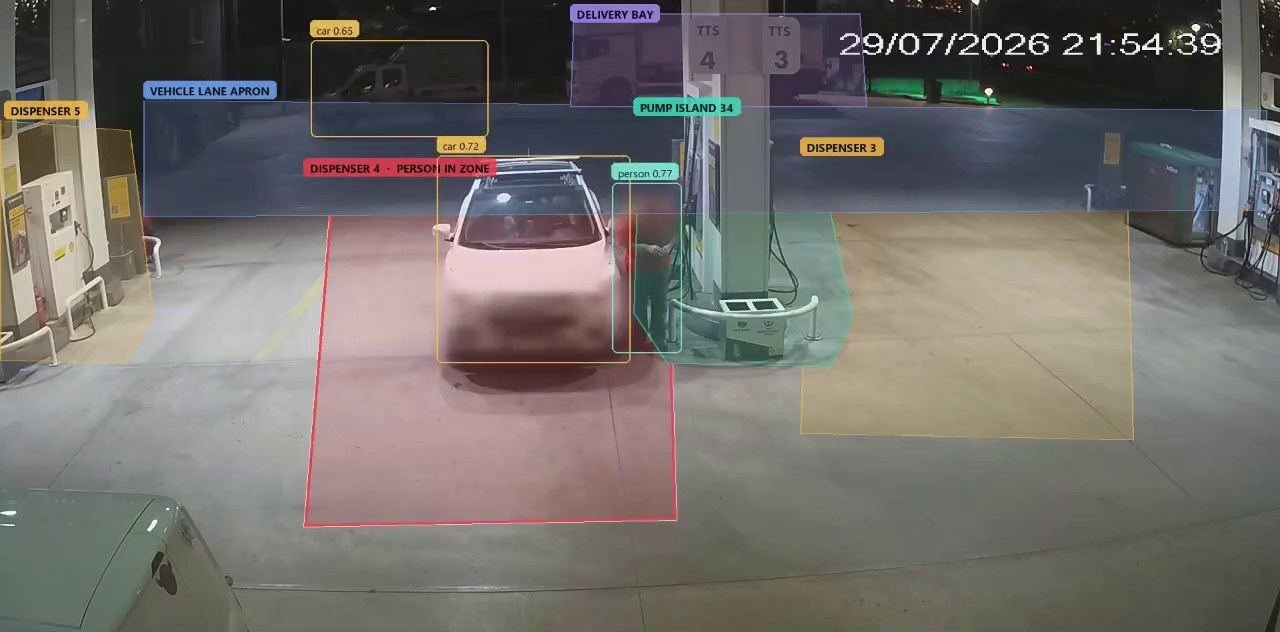
Pedestrian-Vehicle Interaction
Pedestrians entering active vehicle lanes, vehicles reversing toward people, parking that blocks sightlines.
Near-Miss Intelligence and Proactive Safety Training for HSE teams
OTDMT connects to the CCTV your facility already runs and identifies near-miss precursors as they happen. It groups those events into site-specific risk intelligence, shows the HSE team the anonymized evidence behind each pattern, drafts targeted training built from the facility's own situations, and measures whether the same risk declines after the training is delivered.
The visibility gap
Safety programs record two kinds of events well. The first is the incident that causes injury, damage, or a stoppage. The second is the near miss that a worker takes the time to write up. Between those two sits a large set of events that happen and then disappear, with no structured record and no learning attached to them.
These unrecorded situations carry leading-indicator information that HSE teams rarely get to use. A vehicle enters a pedestrian path at the wrong moment. A forklift passes close behind a pedestrian at a blind corner. A delivery vehicle moves while loading is still underway. Each of these is a signal, and most of them are gone by the end of the shift. A facility cannot improve a risk it cannot observe with any regularity.
Why existing CCTV matters
Industrial sites, warehouses, and fuel stations already operate extensive camera coverage over the exact areas where vehicles, people, equipment, and hazardous materials interact. In most facilities this footage is reviewed only after something goes wrong. OTDMT reads relevant safety situations from that existing coverage and writes them as structured events, without new hardware on the forecourt or the warehouse floor.
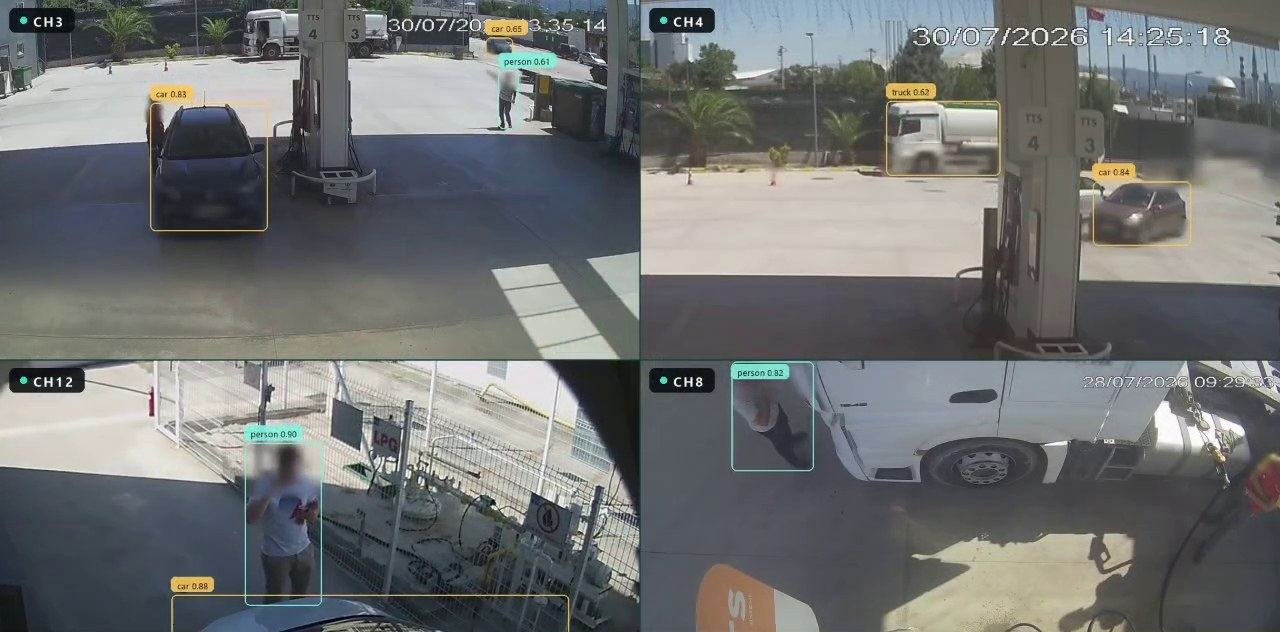
RTSP streams from the site NVR.
Detection runs in memory. Faces and plates are removed before anything is stored or shown.
Only in the areas and hazard categories the HSE team defines.
The OTDMT closed-loop safety engine
OTDMT runs as a continuous loop with five stages. Each stage produces something the next stage uses, and the HSE professional stays in control of every decision that leaves the platform.
OTDMT connects to existing CCTV and detects near-miss precursors using computer vision that runs at the edge, inside the facility. Faces and identifying markers are anonymized. Each relevant situation becomes a structured safety event with a class, a location, and a time.
Events are grouped by location, frequency, severity, and recency. OTDMT maintains a Site Risk Index that ranks where attention is needed, using a five-level severity scale from L1 to L5, and surfaces hotspots and recurring patterns.
OTDMT can use anonymized site footage to draft short training material tied to the situations it has recorded: 60 to 90 second micro-training modules, toolbox talks, and knowledge checks that reflect the facility's real layout.
The HSE professional reviews every draft, edits it, adds local rules and context, approves it, and decides how it is delivered. OTDMT prepares the material. The specialist owns the content and the delivery.
After training is delivered, OTDMT tracks whether the same class of near-miss precursor occurs less often at that location. Measurements can be normalized against operating hours so busy and quiet periods compare fairly.
Hazard and event taxonomy
OTDMT organizes detected situations into a consistent set of classes. Consistent classes make events countable, comparable across locations, and usable as training inputs. The examples under each class are representative.
Pedestrians entering active vehicle lanes, vehicles reversing toward people, parking that blocks sightlines.
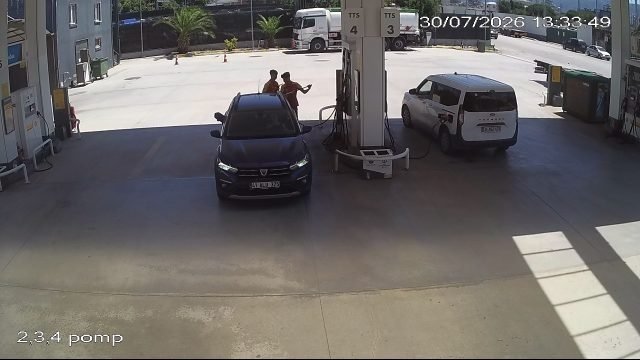
Vehicles grazing bollards or dispenser islands, stretched hoses across paths, departures with a connected line.
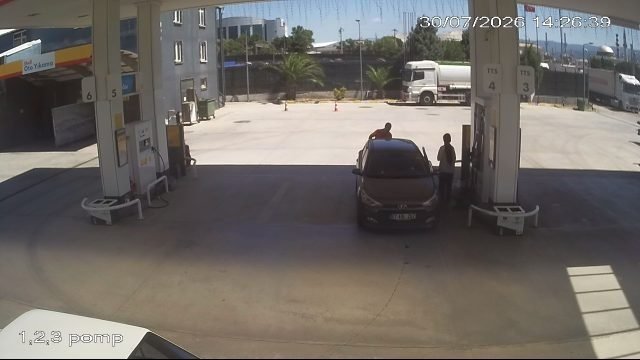
Improper nozzle handling during active flow, coupling leaks, pooling on the surface, overfill trips.
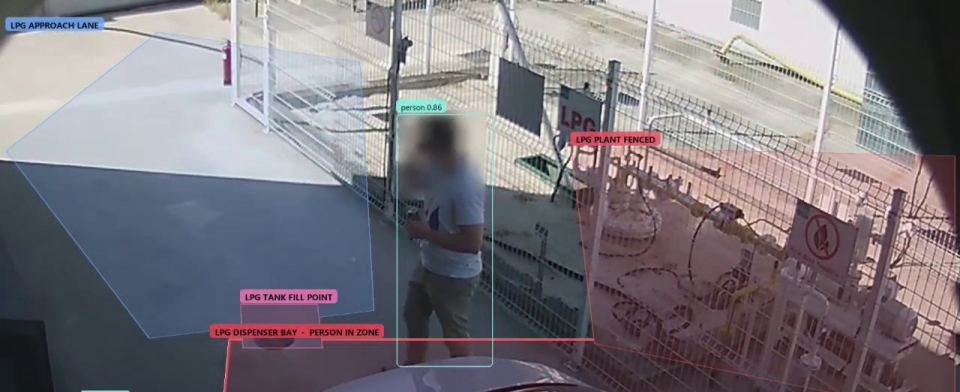
Smoking, e-cigarette use, or open flame in a hazardous zone, engines left running during refueling.
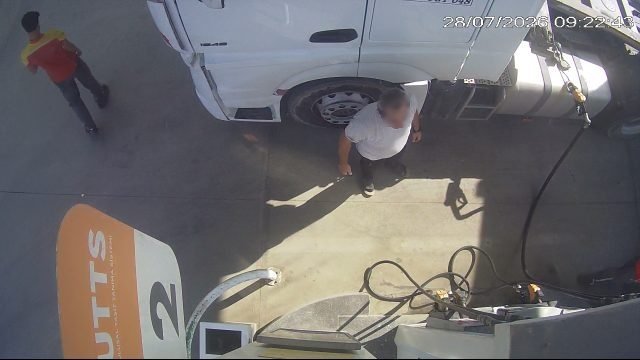
Unregistered vehicles in delivery zones, foot traffic near manifolds, missing barriers or cones during offloading.
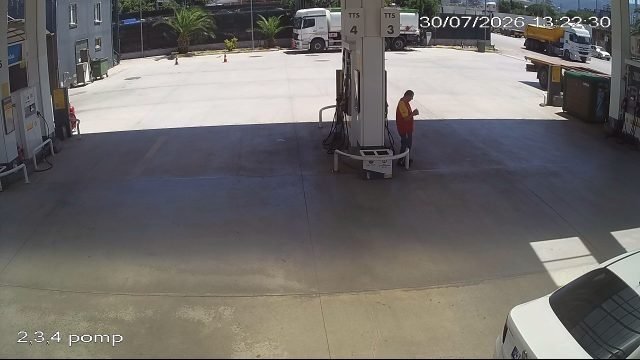
Missing high-visibility or eye protection in drop zones, entry to restricted areas, lone-worker fall or immobility.
PHOTOS: REPRESENTATIVE ENVIRONMENTS FROM A LIVE FORECOURT, FACES AND PLATES REDACTED.
Privacy by design and worker trust
OTDMT processes video at the edge, inside the facility. Faces and identifying visual markers are anonymized, so the records the HSE team works with show the situation and the environmental context rather than an identifiable person. OTDMT is designed with privacy considerations aligned with GDPR and EU AI Act expectations for workplace systems.
Human review and HSE control
Measuring whether the intervention worked
OTDMT is built to connect detection, intervention, and the measurement that follows. It supports a small set of indicators that an HSE team can track over time.
ILLUSTRATIVE CURVE. YOUR SITE'S TREND IS BUILT FROM ITS OWN EVENTS.
FAQ
OTDMT is designed to work with the CCTV a facility already operates in the relevant areas. The camera coverage a site has becomes the input for detection.
OTDMT connects to existing camera sources for the monitored areas. The specific integration is set up with the site during deployment, based on the cameras and areas the HSE team wants to cover.
Video is processed at the edge, inside the facility.
Faces and identifying visual markers are anonymized during processing, so the records the HSE team works with show the situation and its context.
OTDMT is designed to observe safety-relevant situations and environmental conditions in defined areas. With anonymization applied at the edge, the platform is oriented toward hazards and interactions rather than tracking individual workers.
The team works from a prioritized view of events, with anonymized evidence, class, location, and severity for each pattern, and reviews and approves any action before it reaches a worker.
OTDMT turns the situations your cameras already observe into structured near-miss intelligence, targeted site-specific training, and a measurement of whether the risk declined. Your HSE team stays in control of every decision. The next step is a conversation about your site and the areas you want to cover.
Prefer email? hello@otdmt.tech